


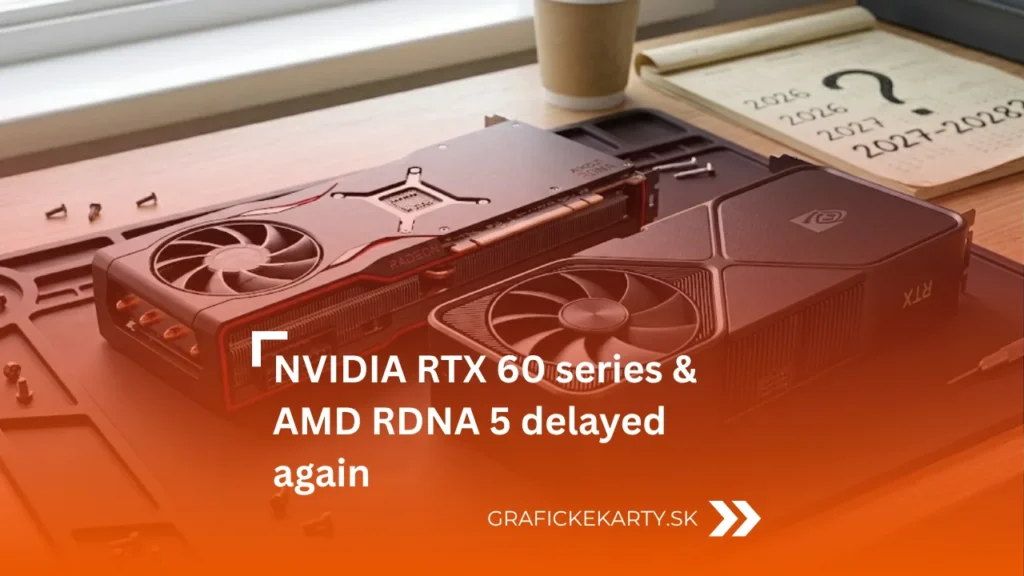
The tech world is facing unexpected changes in the release schedules for key computer hardware. The latest leaks and behind-the-scenes reports from Computex suggest that new architectures from giants AMD and Nvidia will be significantly delayed. While analysts’ original estimates anticipated a traditional, relatively short generation cycle, the reality dictated by the massive demand for AI accelerators is pushing back the arrival of innovations, including the AMD RDNA 5 and NVIDIA RTX 60 series (codenamed Rubin), to mid-2027 or even early 2028. However, as a stopgap for gamers and professionals, Nvidia is preparing the hardware-enhanced, mid-generation RTX 50 Super series.
Disruption of the traditional development cycle and the impact of artificial intelligence
Historically, in the IT sector, we have been accustomed to a roughly two-year cycle during which redesigned chips with higher computational performance regularly hit the market. However, this established technological rhythm is currently disrupted. According to reliable sources within the supply chain, as pointed out by the Digital Foundry portal and a well-known leaker known as MEGAsizeGPU, we will have to wait significantly longer for the new chips. Both the RDNA 5 architecture and the NVIDIA RTX 60 series must give way, on a global scale, to the massive production of AI chips, which generate many times higher margins for manufacturers.
The main reason for this extreme extension of the generation cycle is the insatiable demand for advanced HBM memory and the massive allocation of TSMC’s advanced node manufacturing capacity. For AMD, this means a nearly three-year gap since the release of the RDNA 4 consumer series, which debuted in March 2025.
Nvidia RTX 50 Super: A Technological Bridge to the Future
To fill the gap in the market until the new NVIDIA RTX 60 series arrives, Nvidia is preparing to launch an enhanced RTX 50 Super lineup in early 2027. From an engineering and technical standpoint, this is an extremely important step that will bring fundamental innovations, particularly in the area of the memory subsystem and overall memory bandwidth.

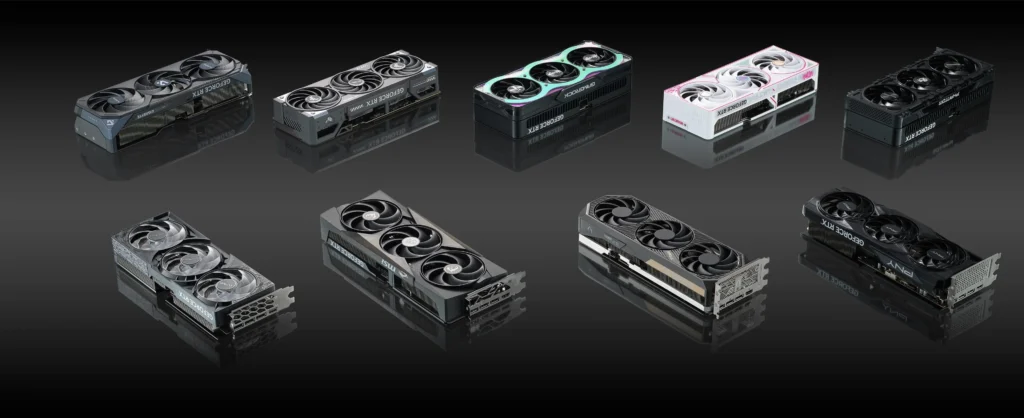
The original Blackwell series utilized 2 GB GDDR7 memory modules. The upgraded Super line, however, will transition to all-new 3 GB GDDR7 modules with higher data density. This transition will allow engineers to increase the total VRAM capacity across the entire portfolio by a massive 50 percent without having to physically redesign the memory bus width on the circuit board. The RTX 5060 Super will finally offer a sufficient 12 GB of memory instead of 8 GB, representing a key leap forward for smooth 1440p gaming without compromising texture quality. The high-end RTX 5070 Ti Super and RTX 5080 Super models will boast up to 24 GB of fast VRAM.
Rubin architecture and the shift to TSMC’s 3nm process
If we take a closer look at what the true next-gen architecture will bring, the NVIDIA RTX 60 series will fully leverage the cutting-edge 3-nanometer (3nm) manufacturing process from Taiwan’s TSMC. It is expected that NVIDIA engineers will focus even more heavily on hardware acceleration of path tracing technology (fully ray-traced scene lighting in real time) for this generation, which places an enormous load on current RT cores.
In addition to raw rasterization performance, an AI-powered software ecosystem will play a key role. The anticipated DLSS 5 image generation technology will require massive computational power from tensor cores, which only the NVIDIA RTX 60 series will be able to fully provide. Analysts predict that at least twelve months will pass between the release of the mid-generation Super models and the arrival of the first full-fledged Rubin chips.
What does this timeline mean for AMD and RDNA 5?
On the other side of the fence stands AMD with its long-awaited response. While the previous RDNA 4 line represented more of a price optimization and a focus on the mid-range, RDNA 5 is expected to mark a full-fledged technological return to the absolute high-end segment. According to a report from the Dutch tech portal Tweakers, industry partners anticipate the arrival of these chips as early as 2027 to 2028.
In practice, this means that while the competition has not yet deployed its strongest weapons and the NVIDIA RTX 60 series has not hit the market, AMD has more time to fine-tune its own hardware. Developing a complex chiplet design and integrating entirely new memory controllers requires many months of demanding optimization and error testing.
Conclusion and Outlook for the Hardware Market
The development of gaming graphics is slowing down at the expense of artificial intelligence, so upgrading from the RTX 40 or RX 7000 series doesn’t make sense yet. It’s worth waiting either for the truly groundbreaking RDNA 5 and NVIDIA RTX 60 series chips, or opting for the upcoming RTX 50 Super series with expanded VRAM for the coming years.