
GPU memory bus width is one of the most overlooked specifications when choosing a graphics card, yet it directly determines how fast data moves between your VRAM and GPU core. Understanding GPU memory bus width helps you match the right card to your resolution, game type, and budget – whether you’re gaming at 1080p or pushing 4K with ray tracing. A wider GPU memory bus width means more data transferred per cycle, which directly affects FPS in games, image quality, and overall smoothness.
Quick overview:
- GPU bus: the data path between the VRAM and the GPU that determines the data transfer rate.
- Why it matters: A wider bus means faster data transfer, higher FPS, and better performance at high resolutions.
- Resolution vs. bus:
- 1080p: 128-bit to 192-bit.
- 1440p: 256-bit.
- 4K: 320-bit and above.
- VRAM and bus: must be in balance for optimal performance (e.g., 12 GB of 256-bit VRAM).
- Card selection tips: consider resolution, game type, compatibility, and budget.
What Is GPU Memory Bus Width?
GPU memory bus width is the “data path” between the VRAM and the GPU. It acts as a “highway” along which textures, data, and calculations needed to process graphics are transferred. Its width is measured in bits (e.g. 128-bit, 256-bit or 384-bit) and determines the amount of data that can be transferred at one time.
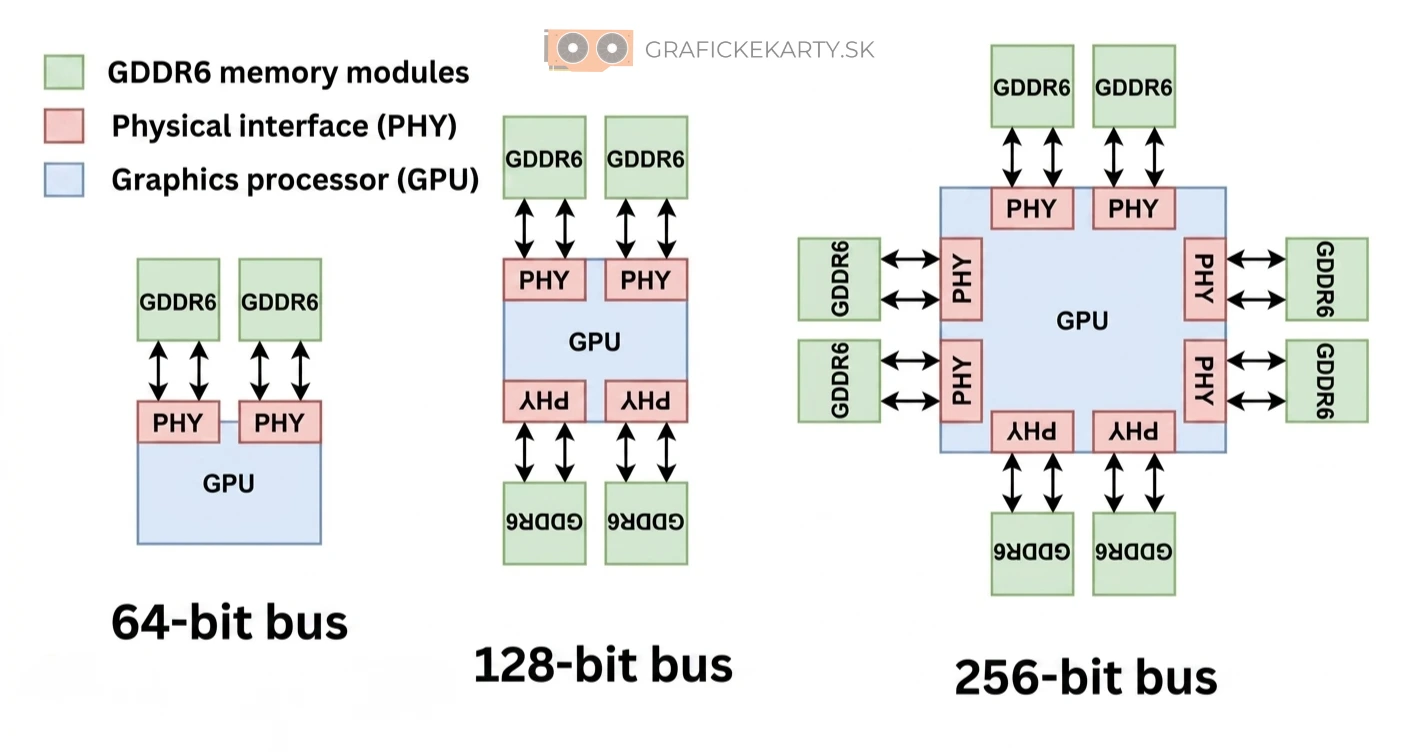
Why GPU Memory Bus Width Matters for Performance
- Data transfer speed: A wider GPU memory bus width allows for faster data transfer between the GPU and VRAM, which is key for processing detailed textures and high resolutions. For example, graphics cards with a 256-bit bus width are better suited for 4K games than 128-bit models.
- Memory bandwidth: GPU memory bus width works together with VRAM frequency to create total memory bandwidth, which determines how much data can be transferred per second. Higher bandwidth means better ability to process complex graphics scenes without performance degradation.
- Performance in games: Modern games with high texture and detail requirements benefit from cards with a wider GPU memory bus width. For example, games like Cyberpunk 2077 or Red Dead Redemption 2 run smoother on cards with a 384-bit bus, especially on Ultra settings.
Examples
- NVIDIA GeForce RTX 4060 (128-bit): Powerful for 1080p gaming, but its narrow bandwidth limits its ability to handle ultra detail at higher resolutions.
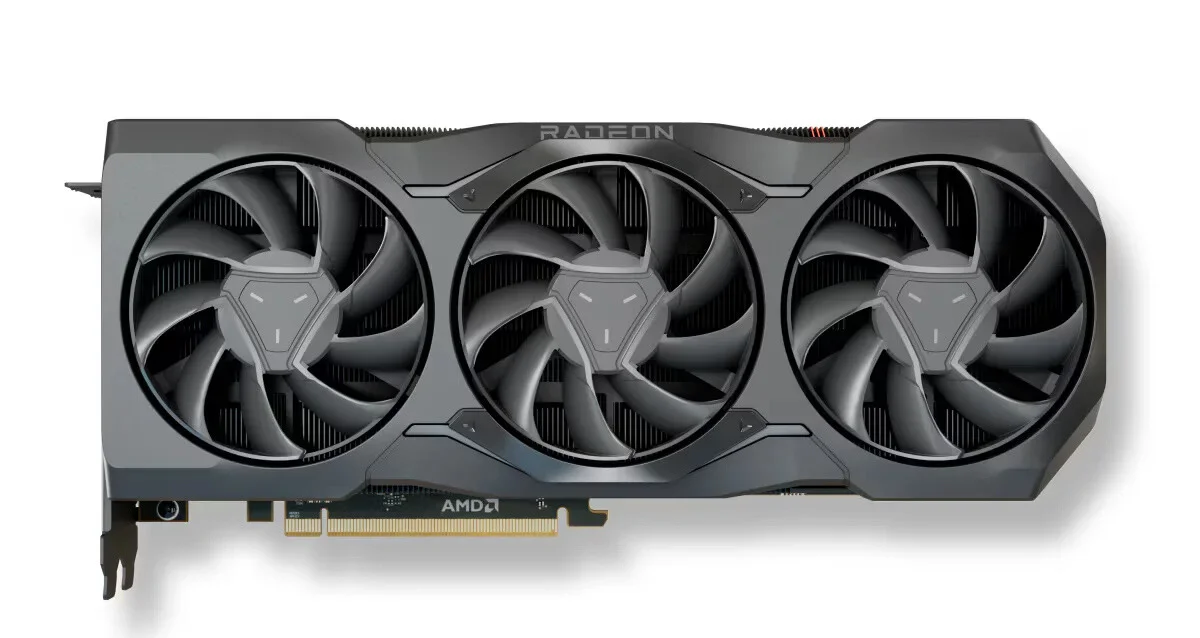
- AMD Radeon RX 7900 XTX (384-bit): Wide bus guarantees high FPS at 4K resolution and supports demanding games with ray tracing.
- Intel Arc A770 (256-bit).
How to Choose a GPU with the Right Memory Bus Width
When choosing a graphics card, bus width is one of the main factors that affect its performance. The right bus width depends on your needs, type of games, resolution and workload. Here are the main points to consider:
Resolution
Full HD (1080p): 128-bit or 192-bit bus cards, such as the NVIDIA GeForce RTX 4060 or AMD Radeon RX 7600, are sufficient for this resolution. These cards can handle less demanding textures and provide sufficient performance.
QHD (1440p): At higher resolutions, more data is important, so we recommend a 256-bit bus, which is offered by models like the RTX 4070 or AMD Radeon RX 7700 XT.
4K Ultra HD: Cards with a wide 320-bit or 384-bit bus, such as the RTX 4090 or Radeon RX 7900 XTX, which can handle large textures and ray tracing, excel here.
The type of games or applications
Casual games: titles like Valorant, Minecraft or CS:GO don’t require a wide bus. Cheaper models with a 128-bit bus are sufficient.
Demanding Games: Games like Cyberpunk 2077, The Witcher 3: Wild Hunt or Hogwarts Legacy require cards with a 256-bit bus width or more to handle high detail and ray tracing.
For video editing, rendering or 3D modelling, the bus width of the graphics card is important. Professional cards, such as the NVIDIA RTX A6000 with 384-bit bus, provide sufficient performance for these tasks.
Compatibility
Before choosing a card, make sure your processor and motherboard can fully utilize the card. If you have an older processor, a wider bus may not give a performance boost as it will be limited by other factors.
Budget
If you plan to use your graphics card for the long term, investing in a wider bus is a worthwhile investment because it can handle future games and applications.
If you’re on a budget, aim for a mid-range with a 192-bit or 256-bit bus that offers a balance of performance and price.
GPU Memory Bus Width and VRAM: Finding the Right Balance
The VRAM memory and bus width of a graphics card are key factors that together affect the performance of the card. While VRAM determines how much data the card can store, bus width affects how quickly that data passes between VRAM and the graphics card core.
VRAM capacity
Large VRAM (e.g. 12GB or 16GB) allows the graphics card to store demanding textures, details and effects, which is crucial for high-resolution games like 4K or for video editing and 3D modelling applications. However, large VRAM without a wide enough bus can be inefficient.
128-bit bus: Good for Full HD gaming with 8GB of VRAM, but at higher resolutions it can start to become a bottleneck.
256-bit bus: Ideal for 1440p and moderately demanding 4K gaming, especially with VRAM of 12GB or more.
384-bit bus: Essential for 4K gaming at maximum detail, or for professional applications that require fast transfer of large data volumes.
Balancing VRAM and GPU Memory Bus Width
If a card contains a large VRAM but has a narrow bus, this can lead to “bottle-necking”, which means that the card cannot efficiently transfer data to the core. Conversely, a card with a wide bus and small VRAM may not have enough space to store all the necessary data, which can cause performance degradation.
Optimal performance depends on balancing VRAM capacity and bus width. For demanding gaming or professional applications, it is advisable to choose a card with high VRAM and a wide bus. For less demanding scenarios, however, a card with less VRAM and a narrow bus can also provide sufficient performance.
Is a Wider GPU Memory Bus Width Always Better?
A wider bus is not always automatically better, although it does have a significant impact on the performance of the graphics card. A wider bus allows for more data transfer between the VRAM and the graphics core, which is advantageous for highly demanding tasks such as 4K gaming or professional rendering. However, there are factors that influence whether a wider bus is actually necessary.
A wider bus isn’t always better; its benefit depends on the rest of the graphics card’s specs and what you’ll be using it for. For gamers with lower demands or for Full HD gaming, a card with a narrower bus is often sufficient. Conversely, for demanding tasks and 4K gaming, a wider bus is key.
FAQ – GPU Memory Bus Width
What is GPU memory bus width?
GPU memory bus width is the data link between the VRAM and the graphics processing unit (GPU). It determines how fast and how much data the card can transfer between these components in each cycle, measured in bits (128-bit, 256-bit, 384-bit).
How does GPU memory bus width affect gaming performance?
GPU memory bus width determines the maximum amount of data the card can transfer in one cycle. A larger GPU memory bus width (e.g. 256-bit versus 128-bit) allows for faster data transfer, which directly improves performance in demanding games and high-resolution applications.
What is the difference between 128-bit and 256-bit GPU memory bus width?
A 128-bit GPU memory bus width is narrower, meaning lower transfer capacity — but it is more energy efficient and less expensive, making it suitable for 1080p gaming. A 256-bit GPU memory bus width allows for higher data transfer, which is essential for 1440p gaming and graphics-intensive tasks.
What GPU memory bus width do I need for 4K gaming
For 4K gaming at maximum detail, you need a GPU memory bus width of at least 320-bit, ideally 384-bit. Cards like the RTX 4090 and AMD Radeon RX 7900 XTX offer this level of bandwidth and can handle large textures and ray tracing without performance bottlenecks.
Is a wider GPU memory bus width always worth the extra cost?
Not always. If you’re gaming at 1080p or playing less demanding titles, a 128-bit or 192-bit GPU memory bus width is sufficient and offers better value. A wider bus is worth investing in when gaming at 1440p or 4K, or when using the card for professional rendering and video editing workloads.