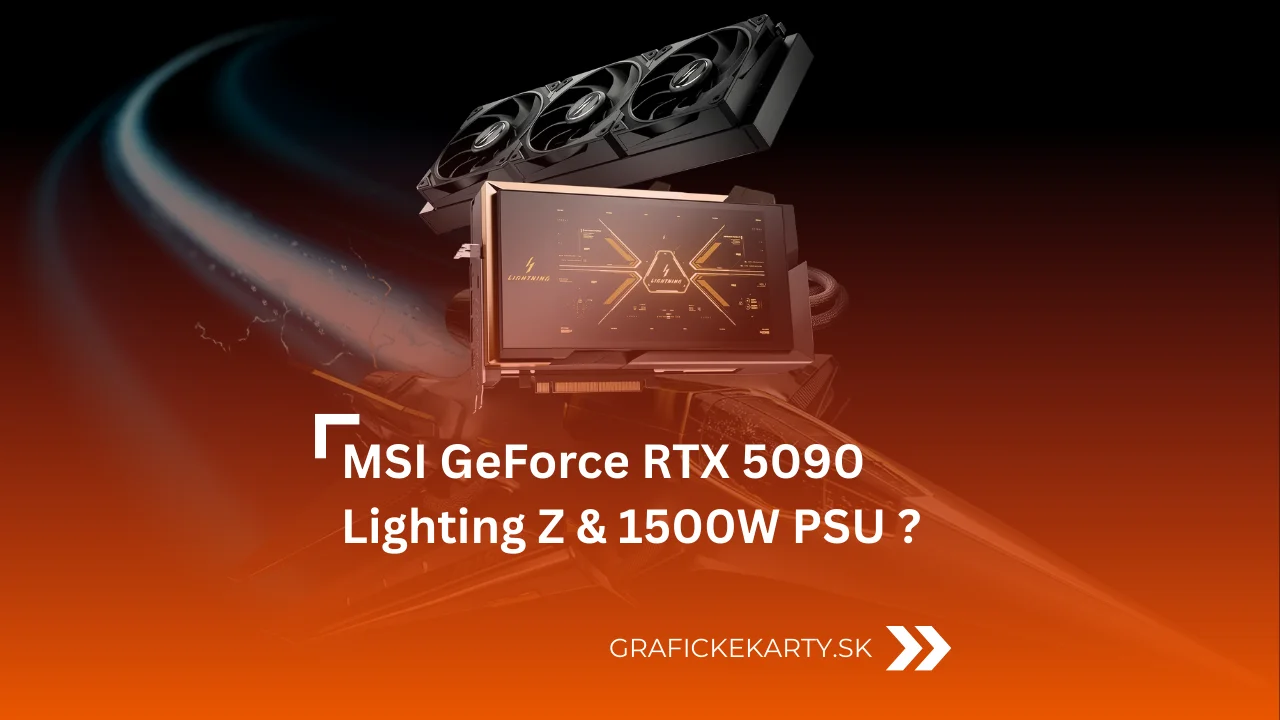
Although several weeks have passed since the January presentation of the Blackwell architecture, the MSI RTX 5090 32G LIGHTNING Z still dominates every discussion. It’s not too late to write about this technological manifesto today – on the contrary, initial real-world experience confirms that MSI has revived the legendary series in its most extreme form for 2026.
The card comes with a redesigned design that combines premium carbon elements with advanced integrated liquid cooling. However, it is not just a matter of aesthetics; the entire construction is fundamentally subordinated to the extreme operating conditions that the new generation of RTX 50 series chips brings.
This model is also unique in its limited availability, precise workmanship, and integration of controls that have not been standard in the graphics card segment until now. With this move, MSI is reviving a legendary series that has always been synonymous with the best that current engineering science in consumer electronics has to offer for the most demanding enthusiasts.
Core: Technical parameters and innovations in cooling
The RTX 5090 32G LIGHTNING Z is based on a graphics chip with an astonishing 21,760 CUDA cores, supported by a massive 32 GB of GDDR7 memory on a wide 512-bit bus with a speed of 28 Gbps. These parameters required a radical approach to power supply and thermal management.
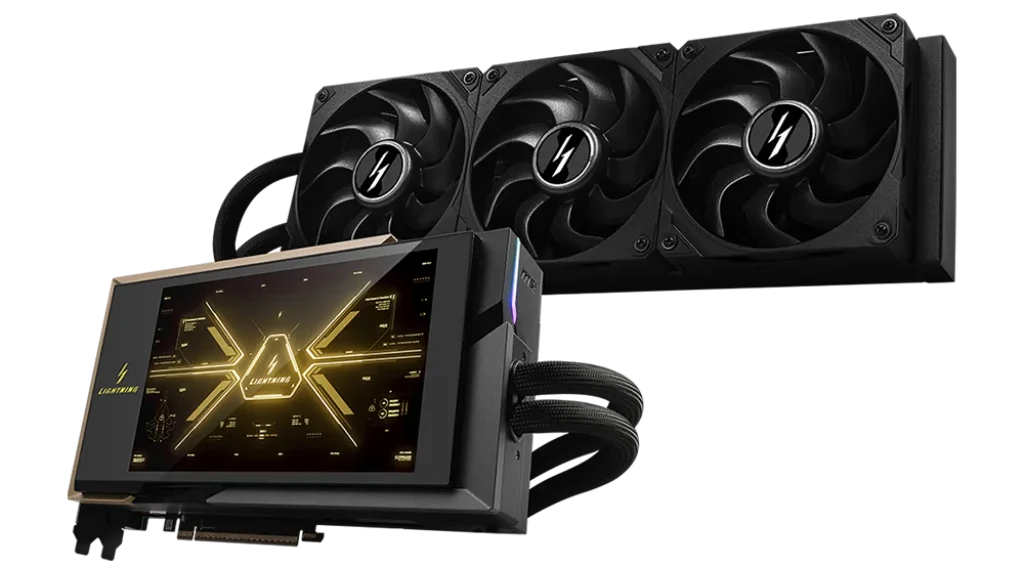
The card uses two 16-pin connectors (12V-2×6) and its consumption in the special Extreme mode reaches 1000 W, which requires an extremely stable power cascade on a reinforced PCB. Heat dissipation is handled by a sophisticated hybrid system consisting of a full-cover cold plate covering not only the GPU itself, but also the VRAM and critical MOSFETs.
| Parameter | Value |
| Model name | G5090-32LZ |
| Graphics chip | NVIDIA GeForce RTX 5090 |
| Interface | PCI Express Gen 5 x 16 |
| Core clock | Extreme: 2775 MHz / Boost: 2730 MHz |
| Number of cores | 21,760 CUDA cores |
| Memory | 32GB GDDR7 (28 Gbps / 512-bit) |
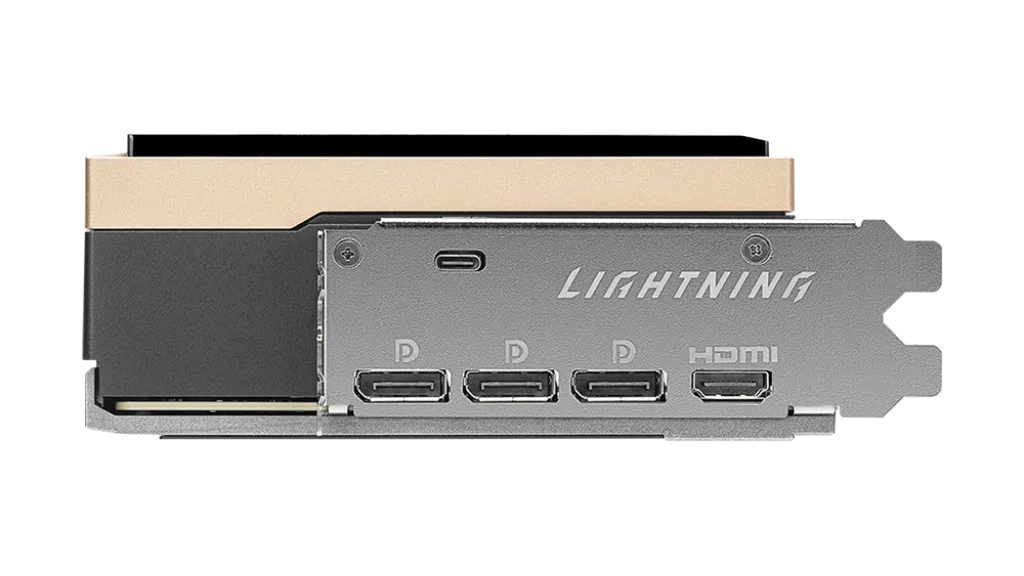
| Output | 3x DP 2.1b, 1x HDMI 2.1b, 1x USB-C (Display) |
| Power consumption (TDP) | 800 W (OC) / 1000 W (Extreme) |
| Power | 2x 16-pin |
| Recommended power supply | 1500 W and above |
| Card dimensions | 10.24 × 5.94 × 2.40 inch |
| Cooling dimensions | 15.51 × 4.72 × 2.20 inch |
The water cooling system is complemented by a new-generation high-pressure pump and an external 14.17 inches radiator. It features a patented hybrid fin design that is designed to create contrasting airflow zones, maximizing heat exchange efficiency. A notable technological feature is the integrated 8-inch LCD display on the side of the card, which is used to monitor system values in real time.
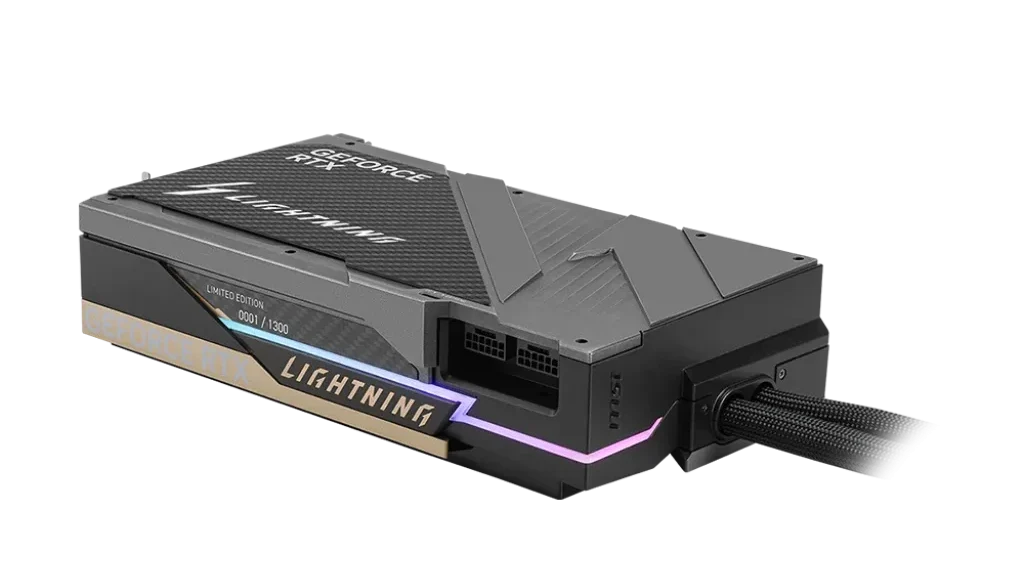
The card’s internal architecture relies on premium components that ensure stability under extreme current loads. The MSI RTX 5090 32G LIGHTNING Z fully supports the latest standards, including DisplayPort 2.1b, which enables native 8K image output at 120 Hz. For users who require absolute control, MSI Center and Afterburner software are available, as well as the new dedicated LIGHTNING HUB web platform.
Conclusion: Practical use and market position
Although the MSI RTX 5090 32G LIGHTNING Z dominates the current performance rankings in synthetic tests, its real-world use goes beyond ordinary gaming. With its massive memory capacity and support for DLSS 4.5 with Multi Frame Generation, this card is the ideal tool for professionals working with artificial intelligence and neural rendering.
The fifth generation of Tensor cores and improved fourth generation RT cores enable efficient processing of complex mega-geometry and lighting scenes that were previously the domain of specialized workstations. Despite the extreme demands on power and space in the system, it is the most technically advanced solution MSI has ever brought to market.
The MSI RTX 5090 32G LIGHTNING Z card thus concludes the current cycle of innovation as a product that pushes the capabilities of the Blackwell architecture to the very limits of current hardware. With its carbon fiber construction and certified packaging, it retains its status as exclusive hardware that is not only a tool for work, but also a demonstration of technological power in the digital era of 2026.
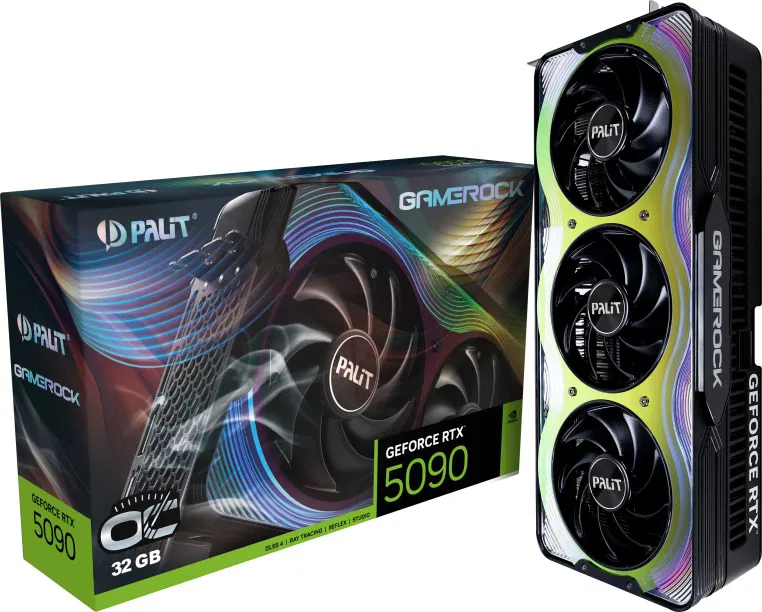
Enjoy uncompromising performance with 32 GB of GDDR7, DLSS support, and revolutionary Ray Tracing. The card is designed for the most demanding 8K gaming and professional AI workloads.