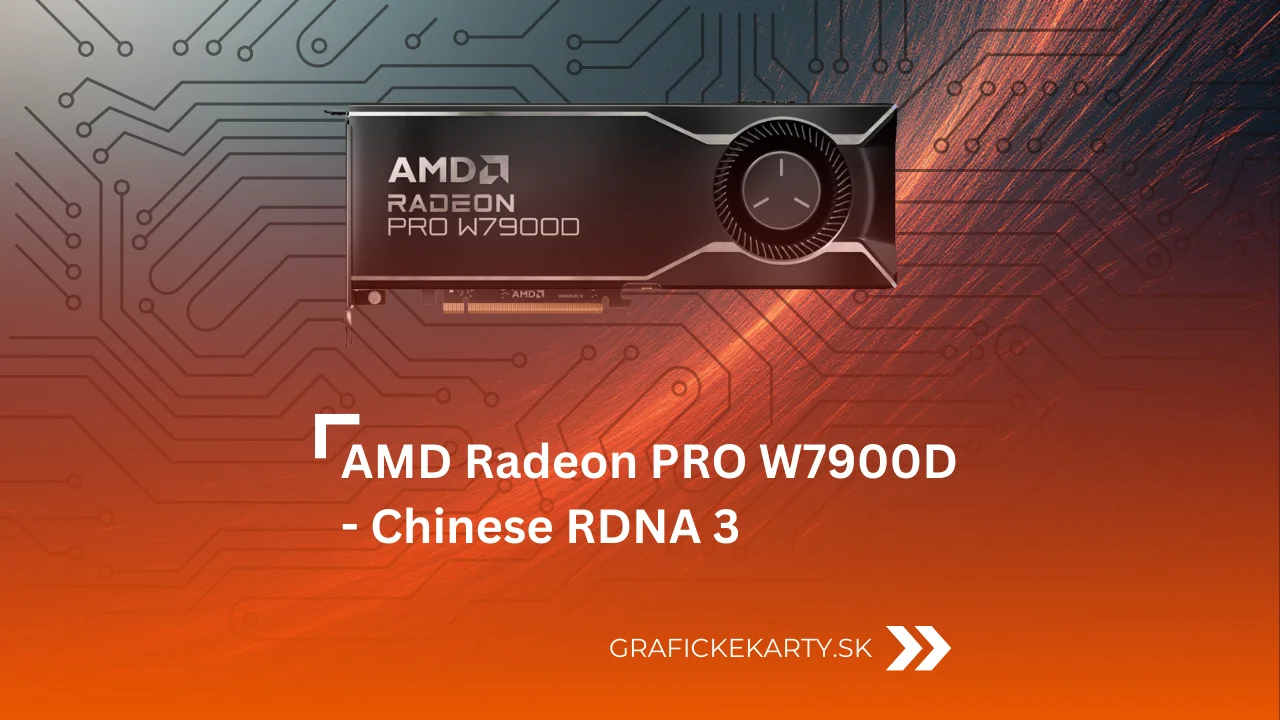
After months of leaks and first hints we wrote about earlier, the AMD Radeon PRO W7900D card has finally appeared officially and exactly as the first reports suggested. AMD has subtly expanded its working series and introduced a modified variant of the flagship W7900 with the “D” designation. This attribution confirms that the card was created for markets with stricter export rules, where the manufacturer has to adapt the performance or firmware to specific regulations.
AMD Radeon PRO W7900D design and focus
The AMD Radeon PRO W7900D acts as a straightforward workstation solution. The tri-slot design, active cooling and full PCIe 4.0 x16 compatibility clearly show that AMD has bet on a proven design.
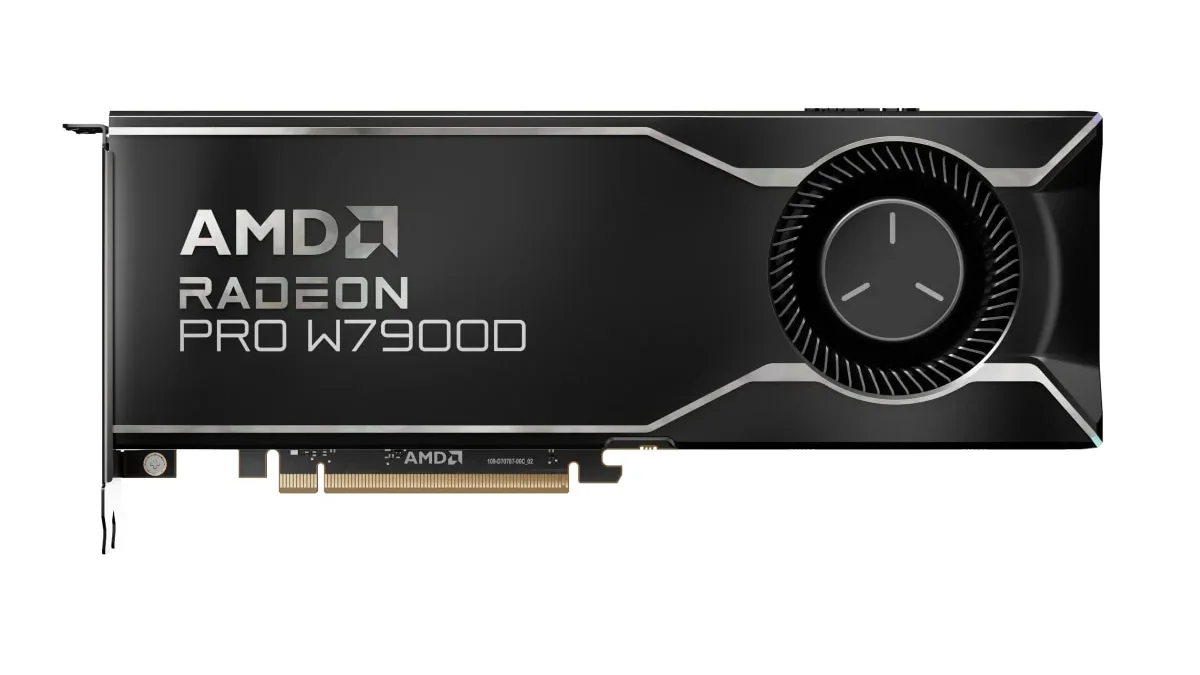
This Model targets areas where stability and large memory play a key role. CAD, 3D visualization, VFX, simulation or large data projects are among the typical scenarios where the W7900D makes sense. The certified drivers and features in the AMD Software PRO Edition underline that this is a card for professional studios and corporate or business needs.
AMD Radeon PRO W7900D Technical Specifications
The AMD Radeon PRO W7900D is based on the proven Navi 31 core with RDNA 3 architecture and retains the same hardware configuration as the standard W7900. It features 96 compute units, 6144 stream processors, 96 MB Infinity Cache and a wide 384-bit memory bus with 864 GB/s throughput. The biggest advantage remains the 48 GB GDDR6 memory, which provides plenty of space for large 3D scenes, complex simulations or data-intensive projects. Additionally, the modern DisplayPort 2.1 outputs support 10 and 12 bit HDR workflows typical of professional studios.
Although the paper specs almost completely replicate the original W7900, the difference lies in areas not commonly specified by AMD – most notably software AI performance, firmware modifications, and specific driver profiles designed to ensure the card meets export limits for certain regions. This means that the W7900D may have an identical hardware configuration, but different behavior under AI or HPC workloads.
Unlike NVIDIA’s solutions, which often reduce memory bandwidth, adjust bus width or disable parts of the compute blocks in models intended for regulated markets, AMD has not resorted to any physical limitations on the chip with the W7900D. The limitations are likely implemented solely at the software and firmware level. The result is a card that retains the full potential of the original W7900 in FP32/FP16 computing, graphics performance and VRAM capacity, while still meeting the regulatory requirements of export markets.
| Parameter | AMD W7900D | AMD W7900 |
| Architecture | RDNA 3 | RDNA 3 |
| Stream processors | 6144 | 6144 |
| Compute Units | 96 | 96 |
| Ray Accelerators | 96 | 96 |
| AI Accelerators | 192 | 192 |
| Memory | 48 GB GDDR6 | 48 GB GDDR6 |
| Bus width | 384-bit | 384-bit |
| Throughput | 864 GB/s | 864 GB/s |
| Infinity Cache | 96 MB | 96 MB |
| VRAM speed | not specified (derivable 18 Gbps) | 18 Gbps |
| TDP | 295 W | 295 W |
| Power | 2× 8-pin | 2× 8-pin |
| Interface | PCIe 4.0 x16 | PCIe 4.0 x16 |
| Outputs | 3× DP 2.1 1× eMiniDP 2.1 | 3× DP 2.1 1× MiniDP 2.1 |
| Length | 11.02 inches | 11.02 inches |
| Thickness | 3-slot | 2-slot or 3-slot according to version |
Availability and reason for “D” version
The launch of the AMD Radeon PRO W7900D took place without much publicity, which may not be unusual in the case of workstation cards. However, for the model with the “D” moniker, this is a solution that AMD has prepared for markets subject to export restrictions on computing hardware. The United States is tightening controls on the sale of high-performance AI GPUs, and it’s these rules that have influenced the shape of the W7900D.
AMD is therefore reaching for the proven RDNA3 architecture, which it can quickly modify to meet the required limits. The workstation version of RDNA 4 is not yet ready, so the W7900D naturally fills a gap where the original W7900 could not be offered in full form. It was not created as a new generation, but as a regionally tailored variant designed primarily for China and OEM partners.
With this approach, AMD maintains its professional presence in regulated markets while offering a solution that remains compatible with the existing PRO ecosystem and the requirements of professional users.
Conclusion
The AMD Radeon PRO W7900D expands AMD’s workhorse offering in a way that responds to current global conditions. It brings the familiar parameters of the original W7900, adds regional customizations, and maintains the performance needed for modern 3D applications, CAD environments, or data-intensive projects.
AMD is demonstrating that it can respond quickly to the changing regulatory environment while continuing to support the professional segment. The W7900D acts as a thoughtful solution for markets that need to balance performance and export limits, but at the same time does not want to retreat from professional standards.
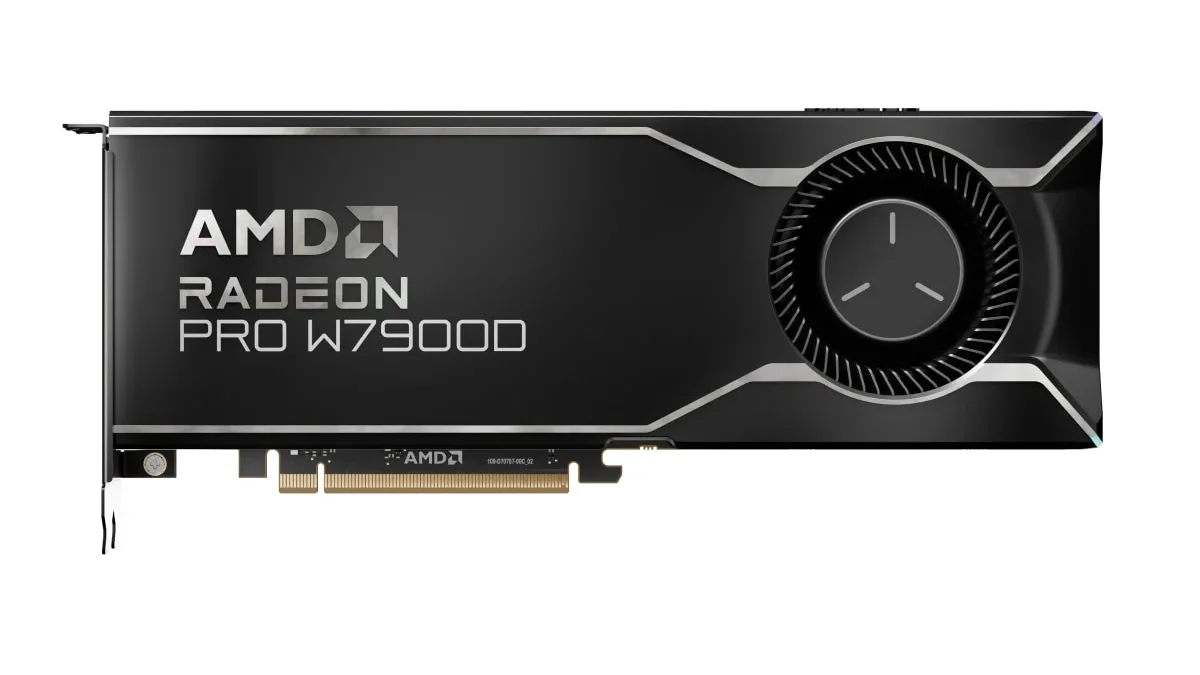
Maximum reliability and 48 GB of VRAM for your projects. The AMD Radeon PRO W7900 is ready for work.