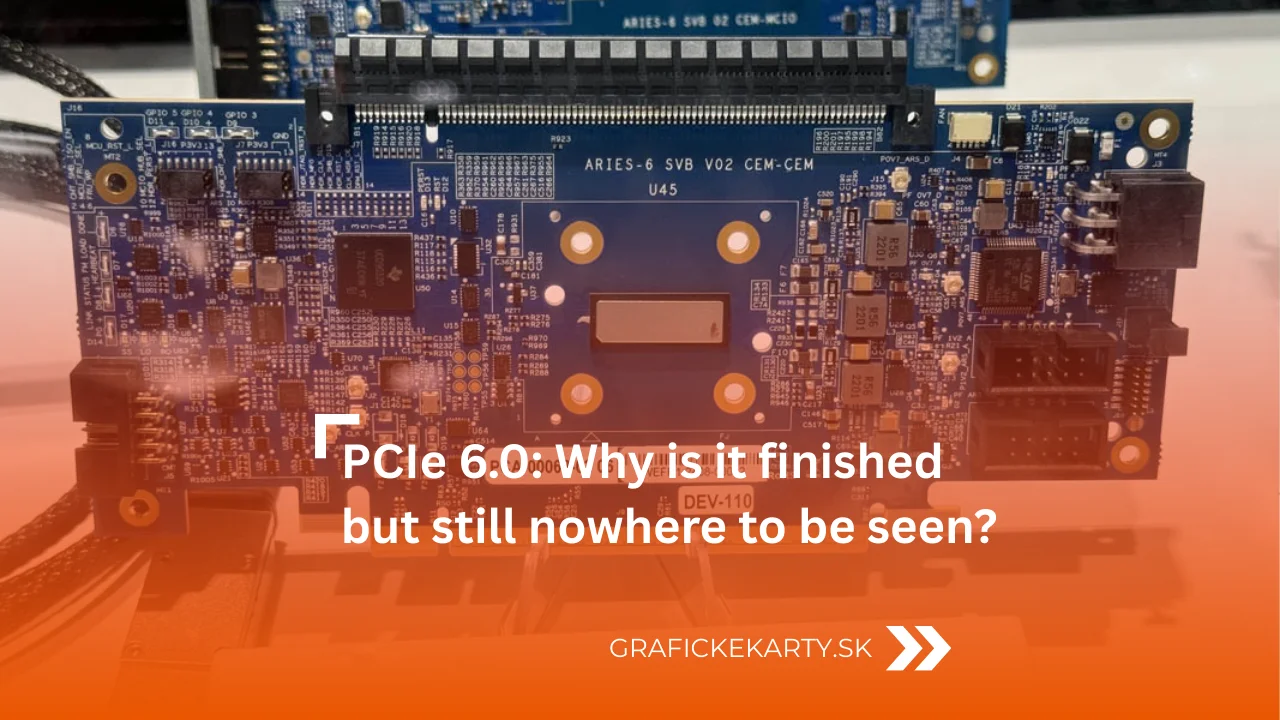
PCI Express is one of those technologies that we use every day, but rarely really pay attention to. Every graphics card, NVMe drive, network card or expander uses this unassuming bus that has defined the pace of modern computing for over two decades. With PCIe 6.0 comes another significant step forward, increasing throughput to unprecedented proportions and introducing entirely new data transfer techniques. Although this specification has been officially finalized for several years now, its real deployment in devices is still in its infancy. PCIe 6.0 is therefore much talked about but little seen in practice, creating room for expectations, conjecture, and even technological debate about whether and how this technology will actually change the performance ecosystem of computing.
How PCIe 6.0 came to be and why it was needed
The organization behind the development is the PCI-SIG, which has been setting standards for PCI and PCI Express interfaces since 1992. With increasing demands for throughput in areas such as artificial intelligence, compute-intensive computing, server virtualization or data centers.
The explosion in the volume of data generated by AI training, the ever-increasing capacity of NVMe storage, the need for instant access to huge datasets, and the pressure for low latency have meant that developers have had to find a way to achieve significantly higher throughput without making it extremely expensive or prohibitively expensive to increase power consumption. The result was the PCIe 6.0 standard, which doubles the speed of PCIe 5.0 and achieves up to 64 gigatransfers per second per link.
PCIe 6.0 thus came about not as an evolution, but rather as a necessary response to the new demands of the data industry. While PCIe 4.0 and 5.0 served to incrementally increase throughput, PCIe 6.0 changes the very philosophy of how data is transferred, which can have far-reaching implications for the entire hardware ecosystem.
Technical changes that define the next era of the PCI Express standard
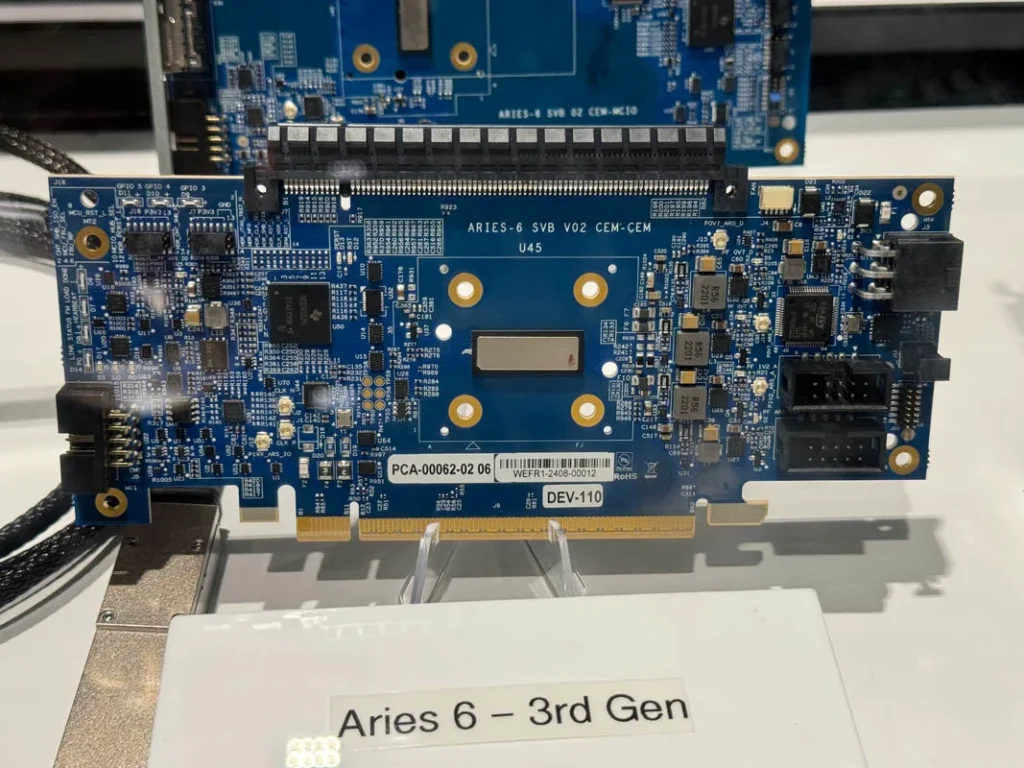
The biggest technology change with PCIe 6.0 is the transition from NRZ binary signaling to the more modern PAM4, which uses four signal levels instead of two. This allows more information to be transferred at the same frequency, effectively doubling throughput without the need for extreme frequency increases that would bring even greater power consumption and overheating issues.
While these technical innovations may sound abstract, in practice they enable a huge leap in speed. While PCIe 5.0 provides a theoretical throughput of around 128 GB/s in one direction in x16 configuration, PCIe 6.0 doubles this figure to around 256 GB/s bidirectionally. This is a speed that until recently was reserved only for dedicated systems in supercomputers. Despite the significant increase in throughput, however, the creators of the standard have kept latency at a nearly identical level to previous generations, which is extremely challenging from a technical standpoint.
Also key is the fact that PCIe 6.0 remains fully backward compatible with all earlier generations of PCIe. This means that new motherboards should be able to work with older devices without the need for any modifications from the user, easing the gradual transition and avoiding the chaos that would arise from suddenly cutting off older standards.
Where PCIe 6.0 applies and why it may be useless to many users for now
While the speeds that PCIe 6.0 brings are impressive at first glance, the reality is that most mainstream users are unlikely to feel the difference even in the coming years. Common gaming GPUs don’t even take full advantage of PCIe 4.0, let alone PCIe 5.0, and it’s a similar situation with standard SSDs, which already often run into the limits of heat and power regulation.
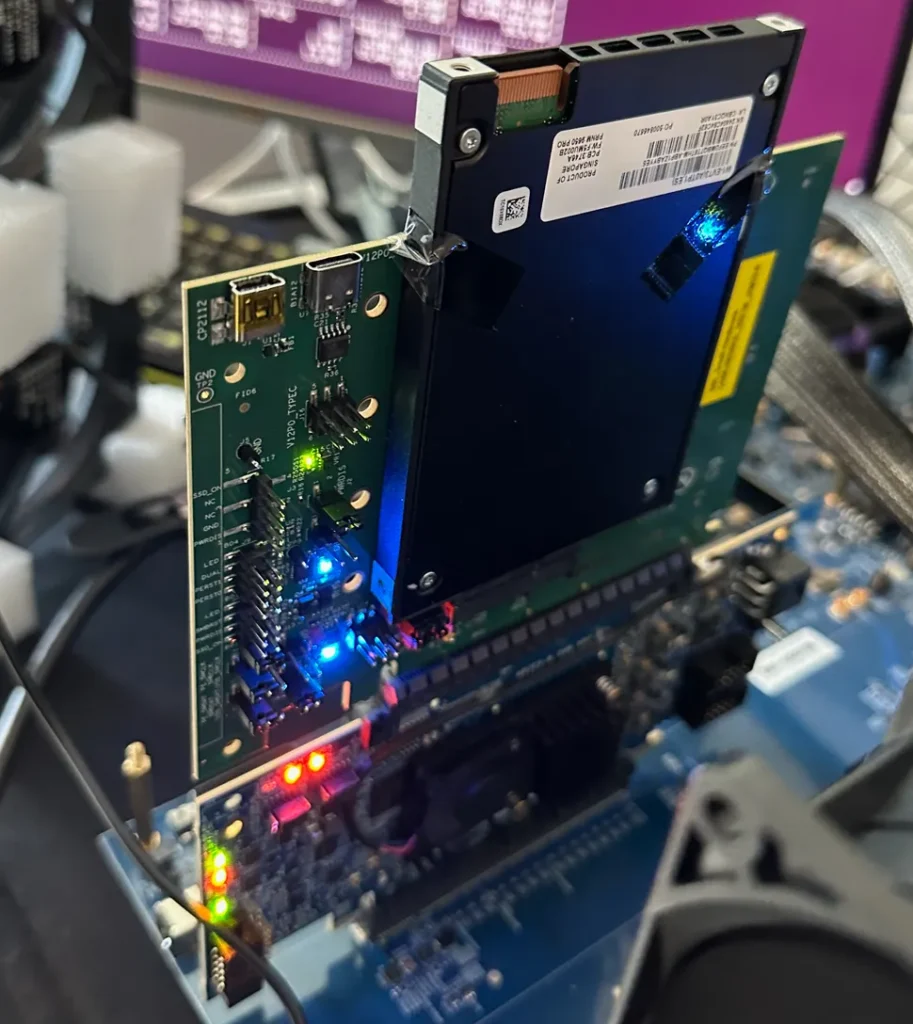
However, the situation is completely different for servers, data centres, supercomputers and in the field of artificial intelligence. Training large models, transferring huge datasets between GPU accelerators, high-speed NVMe arrays, virtualization in clouds, and working with large parallel workloads all require ever higher throughput. PCIe 6.0 enables GPUs to be interconnected at speeds that were previously dependent on dedicated server interconnects such as NVLink, InfiniBand, or manufacturers’ own proprietary solutions.
It is in these areas where PCIe 6.0 can dramatically increase performance and efficiency, meaning lower power costs, shorter computation times, and the ability to work with larger models or datasets. Importantly, it will also allow manufacturers to use fewer lines at the same throughput, freeing up space for additional expansion devices or more complex internal interconnects in the system.
Why PCIe 6.0 adoption is slower than expected
Implementing PCIe 6.0 is extremely technologically challenging. Higher transfer speeds require more precise motherboard design, higher-quality PCB materials, more complicated link routing, and often new active retimers that can re-amplify or correctly interpret the signal. At 64 GT/s, every millimetre of path on the board acts as a potential source of interference, reflections or losses, forcing manufacturers to invest in more expensive technologies.
At the same time, it is not easy to develop SSD controllers or graphics chips that can use such speeds stably. The production of increasingly complex semiconductors, their testing and certification are driving up the price, so the mainstream market, which is extremely price-sensitive, is likely to be slower to adopt the new standard.
The need for special test facilities and different equipment also plays a role. New signaling methods require longer certification cycles, which has caused some slippage on the part of both motherboard and chipset manufacturers. As a result, even though PCIe 6.0 is ready on paper, real products supporting this technology have been slower to arrive than originally anticipated.
Looking ahead: what comes after PCIe 6.0 and what it means for the market
An interesting fact is that while PCIe 6.0 is still slowly making its way to market, there is already a finished PCIe 7.0 specification and PCIe 8.0 is also being discussed. Future generations are looking to double the throughput of previous standards again, so in a few years time speeds of up to around one terabyte per second could be achieved in theory in x16 configurations.
It is therefore realistic that some manufacturers, especially in the desktop area, may skip PCIe 6.0 altogether and go straight to PCIe 7.0. This is a similar situation to what we have seen in the past with other technologies where certain generations remained less prevalent in practice, even though they were technically interesting. For mainstream users, this means that buying hardware just to have PCIe 6.0 doesn’t make much sense yet. In fact, development is moving forward so quickly that in two or three years the situation may be completely different, and PCIe 6.0 will become just a brief episode between the two more aggressive generations of the standard.
Conclusion
PCIe 6.0 represents an ambitious step forward that changes the way data is transferred and sets the stage for the next generation of ultrafast interconnect technologies. Although its theoretical throughput looks impressive, its real-world application will initially be in professional domains, in servers and data centers, rather than in home computers. For ordinary users, PCIe 6.0 thus does not yet present a reason for an immediate upgrade, but for technology enthusiasts and professionals it is a fascinating glimpse into the next era of computing.
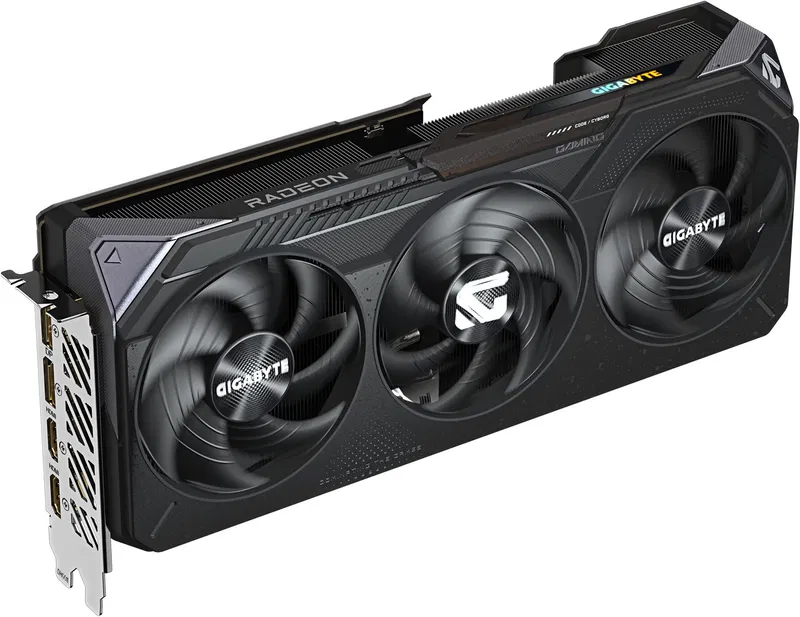
Check the current offer of modern graphics cards and choose a model that gives you the best performance for gaming and creative work.