In the shadow of the anticipated news from CES 2026, AMD has released an important update. The new AMD ROCm 7.2 software package is AMD’s key weapon in the fight against the competing CUDA platform and brings significant improvements to GPU computing. Although this is not a revolutionary change in architecture, it is an important step in stabilizing the entire ecosystem for Linux users and, increasingly, Windows users.
Support for RDNA 4 and mainstream
The most notable addition to the list of changes is the official addition of support for graphics cards based on the latest RDNA 4 architecture. Specifically, these are the Radeon RX 9060 XT LP and the professional variant Radeon AI PRO R9600D. The first card, with 16 GB of VRAM and a low profile (LP), is primarily aimed at compact workstations designed for local acceleration of AI models. Thanks to AMD ROCm 7.2, developers can now take full advantage of this chip’s 64 AI accelerators in environments such as PyTorch and TensorFlow without the need for emulation.
Another interesting feature is the long-awaited support for the Radeon RX 7700 series. Owners of this mid-range previous generation (RDNA 3) have long been in limbo when it comes to official compatibility with computing libraries. AMD ROCm 7.2 finally ranks them among officially supported hardware, making these cards an affordable option for students and enthusiasts working with neural networks.
| Architecture | Supported models | Status in 7.2 |
| RDNA 4 | RX 9060 XT LP, AI PRO R9600D | New |
| RDNA 3 | RX 7900 XT, 7800 XT, 7700 XT | Full support |
| Instinct | MI300X, MI325X, MI350 Series | Optimized |
Diagnostics and profiling: ROCm Optiq is coming
For professionals, how efficiently errors can be found in code is just as important as performance itself. The new version introduces a beta version of the ROCm Optiq tool. It is a visualization platform with a graphical interface that replaces older, text-only tools for tracing GPU operations.
Optiq allows developers to closely monitor how data moves between memory and computing cores. At a time when there is increasing talk about the efficiency of calculations in data centers, such a tool is a necessity. It is also important to note that the platform has been designed as multi-platform from the outset, making it easier for developers to switch between Linux and Windows.

Optimization for Instinct and the enterprise segment
While ordinary users are interested in Radeons, AMD’s core business lies in Instinct accelerators. AMD ROCm 7.2 brings specific model optimizations for the MI300X series and the newer MI350 series. These improvements focus primarily on performance in large language model (LLM) inference.
The update also includes improved Node Power Management. In multi-GPU configurations, the system can now more intelligently distribute power limits among individual cards, preventing overheating and reducing overall operating costs in server rooms.
Technical changes and better availability on Windows
From a programming perspective, AMD ROCm 7.2 brings important support for the SPIR-V format for the hipCUB and rocThrust libraries, which significantly improves code portability. Programmers using the HIP interface can now more efficiently transfer applications from the CUDA environment to AMD hardware. These improvements go hand in hand with efforts to make Windows an equal platform for computing. Integration within AMD ROCm 7.2 enables native installation directly through Adrenalin drivers (version 26.1.1).
In practice, this means that tools such as ComfyUI for Stable Diffusion no longer require complex configuration via WSL2 on Windows, which increases stability and performance. In addition to home use, AMD is also targeting the scientific sphere with its new ROCm Simulation toolkit. Designed for demanding technical simulations, AMD ROCm 7.2 aims to compete with Nvidia in the academic and engineering sectors, where there has been a lack of adequate open alternatives until now.
Summary
The release of AMD ROCm 7.2 confirms that AMD is no longer focusing solely on raw hardware performance, but is systematically filling the gaps in software support. The expansion to mid-range cards and support for the new RDNA 4 generation are a clear signal to the market. Although there is still a long way to go to completely close the software gap with the competition, regular updates of this type are exactly what the community expects from AMD.
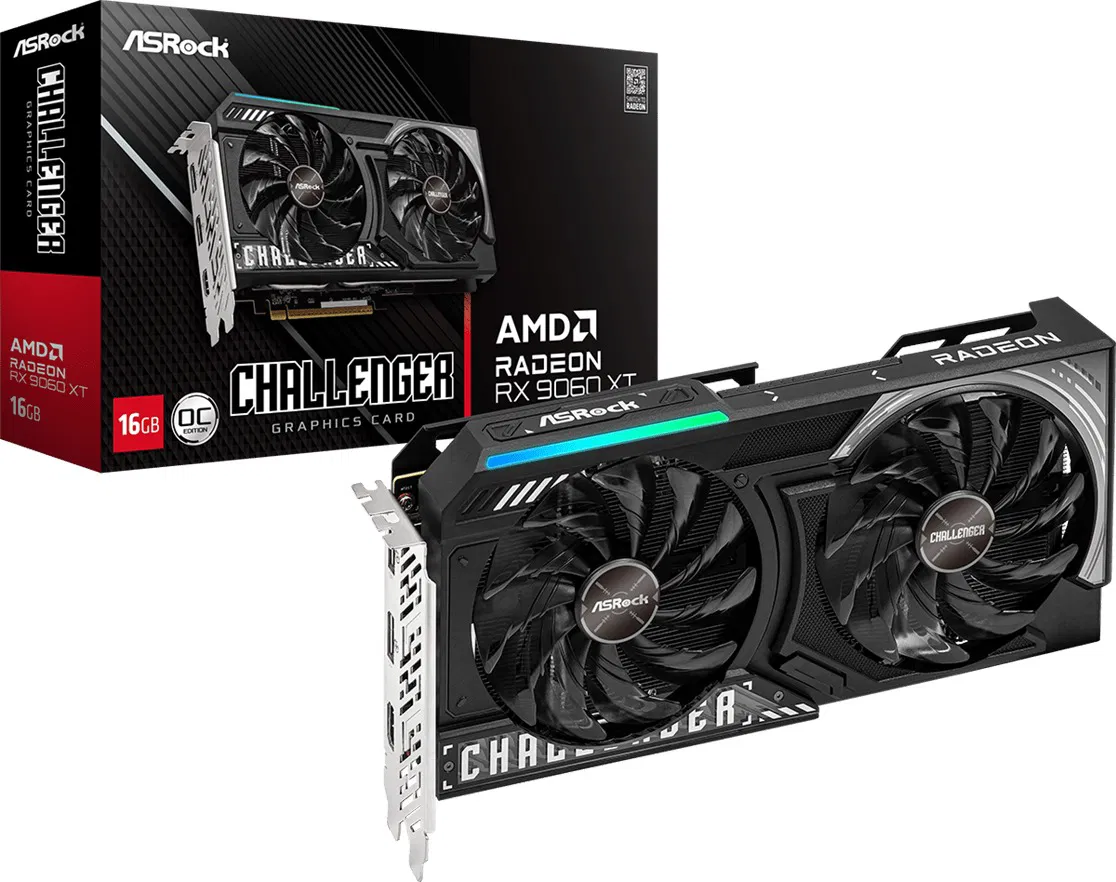
The new Radeon RX 9060 XT with 16 GB VRAM and full ROCm 7.2 support delivers top-tier compute performance in a compact package.