


GPU market share 2025 has made a significant shift, according to Jon Peddie Research’s latest analysis. While NVIDIA still dominates, its share has fallen to around 92%. This is a noticeable decline after years of stability and suggests that competitors are gaining ground. The biggest surprise comes from Intel – after a prolonged period, it is back above 1% in the dedicated graphics card segment. This is an important and encouraging signal for a brand that has been struggling to establish itself in this market for years.
AMD has improved over the same period, moving up to around 7%. Although JPR doesn’t cite a single specific reason, the gradual rollout of the next-generation Radeon RX 9000 and its more stable pricing in more markets likely helped contribute to this modest growth. For AMD, this is a welcome turnaround after years of stagnation.

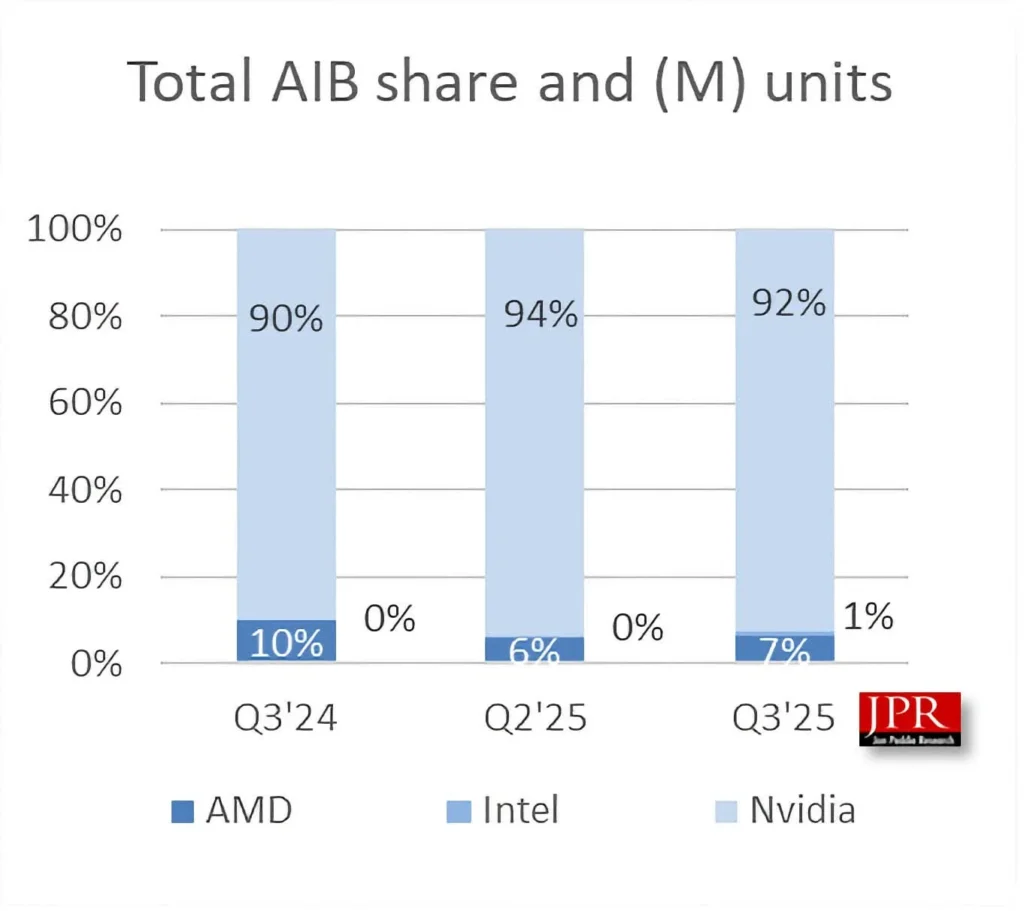
NVIDIA’s decline and AMD’s growth: what Q3 2025 brought
The biggest impact on GPU market share 2025 was the availability and price of graphics cards. NVIDIA has struggled in recent months with limited availability of some RTX 50 generation models, which combined with premium pricing has weakened demand. A drop of around two percentage points is therefore not shocking.
AMD, on the other hand, is moving higher, especially in the mid-range, where Radeon RX 9000 models are pushing through with better price-performance ratios. This trend is confirmed by JPR, which describes a steady, albeit slow, strengthening of AMD’s position in the global market.
The most interesting shift, however, comes from Intel. Arc Alchemist started out with significant driver issues, but incremental DX11 and DX12 performance improvements during 2024 and 2025 helped boost demand. Crossing the 1% threshold is symbolic for now, but in the context of the GPU market share 2025, it shows that Intel isn’t giving up. The first models of the next-generation Battlemage have already entered the market, but the decisive impact may only come from higher SKUs that arrive later and may shuffle the cards more significantly.
What this means for gamers and graphics pricing
For consumers, these changes may be positive. More competition puts pressure on prices, which is more than necessary at current prices of high-end models. While NVIDIA retains the highest performance, the high prices of the RTX 50 generation naturally shift some customers to alternatives.
AMD is currently strengthening especially in the mid-range with the Radeon RX 9000, where the price/performance ratio plays an important role. Intel can make a home in the budget segment, where competition has been weaker for a long time. If players see more aggressive pricing responses from AMD and the successful launch of Battlemage, the GPU market share 2025 may just be the start of bigger changes in the coming quarters.
For users planning to upgrade, we especially recommend keeping an eye on pricing trends in the mid-range and above. The market is finally moving after years of stagnation, and early shifts suggest that the current state of affairs could change significantly in 2026.
What can we expect in the coming quarters
The end of 2025 could bring further interesting movements. NVIDIA is likely to work on stabilizing the availability of the RTX 50 series, which could affect its market share. AMD will continue to expand its Radeon RX 9000 offerings and the pricing strategy that helped it win back some of the segment. However, the biggest question mark remains with Intel. If Battlemage arrives in the first half of 2026 in technically good shape, the current GPU market share 2025 may just be a prelude to much more balanced competition.
How do we see it ?
From our perspective, nothing dramatic is happening in the market. NVIDIA is down only a few percent, which may be related to Intel re-entering the dedicated GPU world after years and increasing its share. AMD, on the other hand, launched the Radeon RX 9000 series during the year, which brought much more affordable models compared to NVIDIA’s competing cards. Pricing has also done its part – several markets have reported AMD GPUs becoming more expensive, while NVIDIA is directing much of its production to the professional graphics card segment, where it is taking huge orders for AI and workstation GPUs.
Conclusion
The graphics card market has picked up again after a long period of stagnation. NVIDIA declined slightly, AMD grew and Intel finally got above 1%. Thus, the developments capturing the GPU market share 2025 suggest that players can expect more options, better pricing and a more noticeable push for innovation in the coming quarters. If you’re planning a graphics card upgrade, it pays to keep an eye on the market – the changes may finally be positive for many users.

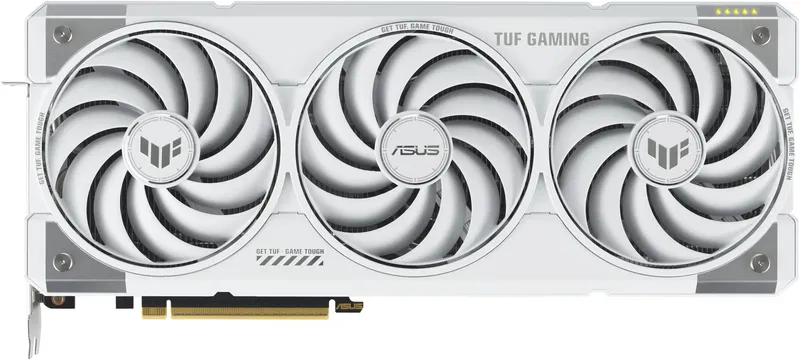
Choose a graphics card from NVIDIA, AMD, or Intel based on performance, price, and your needs. Check the current selection on Amazon