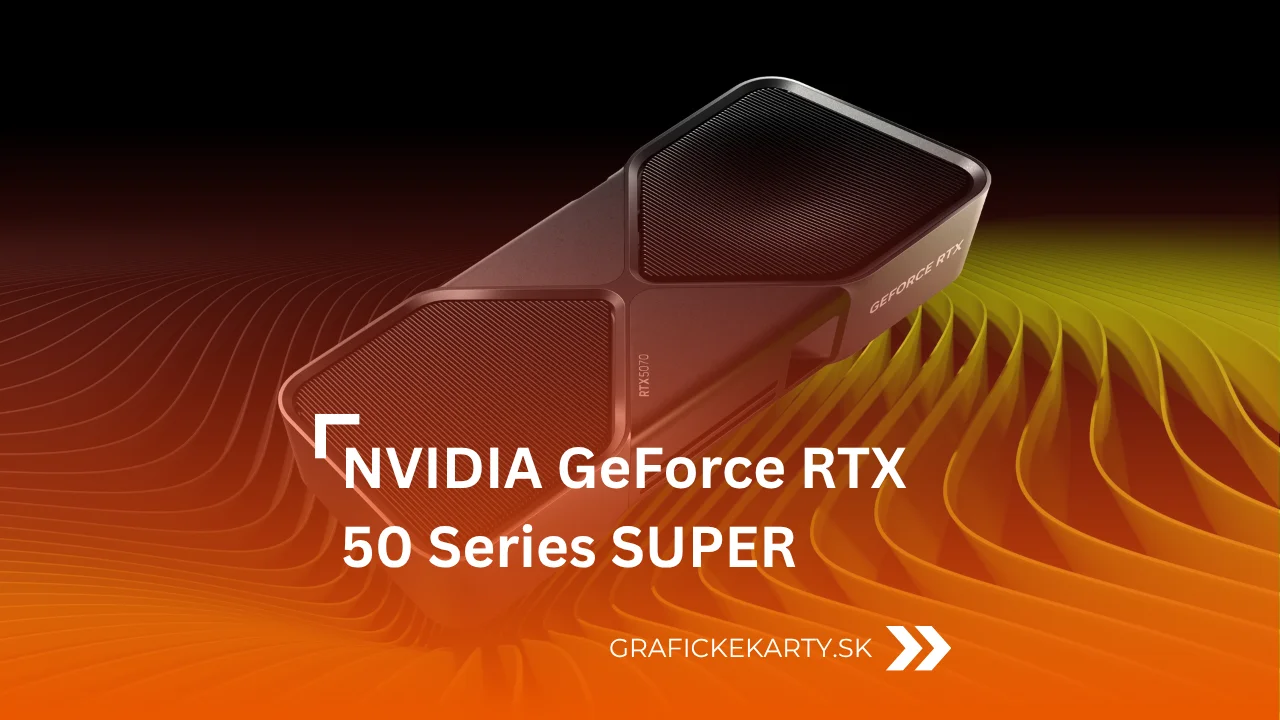
The GeForce RTX 50 Series SUPER seems to be delayed more than expected. According to inside information brought to us by tech sources, NVIDIA has pushed back the release of this line to the third quarter of 2026. The expected refresh of the Blackwell architecture, originally planned for early 2026, will thus be delayed by several months for unknown reasons.
Reasons for the delay in the arrival of the GeForce RTX 50 Series SUPER
The report suggests that the decision is not related to any specific technical flaw. Rather, it is a strategy to give manufacturers more time to optimize the power consumption and production costs of the new generation of GPUs. NVIDIA is said to still be finalizing chips for the RTX 5090 and RTX 5080 models, which are expected to remain a top priority in the coming years.
Unlike the last generation, the GeForce RTX 50 Series SUPER should not come as a slight refresh, but as a more modified and powerful version of the base models. Thus, NVIDIA is likely planning for a bigger performance jump and a longer lifecycle for the entire Blackwell platform.
A tense situation in the mid-range
At the same time, it is mentioned that the RTX 5060 Ti 16 GB model may soon become a scarce commodity. Some partners are already having problems with GDDR7 memory supply, and the production capacity is currently at full capacity. The consequence may be short-term shortages in stores and price increases in mid-range graphics cards.
If the situation does not calm down, by the end of 2025 some versions of the RTX 5060 Ti may only be available in limited quantities, especially those with higher memory and improved cooling. Manufacturers will likely focus on the 8GB version, which is cheaper and more accessible in terms of materials and manufacturing.
Impact on the market and competition
Pushing the GeForce RTX 50 Series SUPER to a later date may open the door to competition. AMD is already planning to expand its RDNA 4 card offerings into the lower end, while Intel is preparing new Arc models with a better price/performance ratio. If NVIDIA doesn’t introduce any major news in the first half of 2026, players may reach for alternatives from competitors more often.
Still, NVIDIA has held a dominant position in recent generations, and analysts don’t expect it to be threatened by short-term delays. Rather the opposite – it could be a tactical decision that sets the manufacturer up for a stronger comeback in the second half of 2026 with more power and energy efficient models.
The future of Blackwell and customer expectations
The Blackwell architecture is still in the expansion phase – new cards built on GB206 and GB207 chips are gradually coming to the mid-range, but premium versions are still missing. The GeForce RTX 50 Series SUPER was originally supposed to bring enhanced variants with higher clock speeds and more VRAM, which would have made it an attractive choice for 1440p and 4K gamers. At launch time, DLSS 4 and AI acceleration are already expected to be fully optimized for the new shader cores and neural rendering.
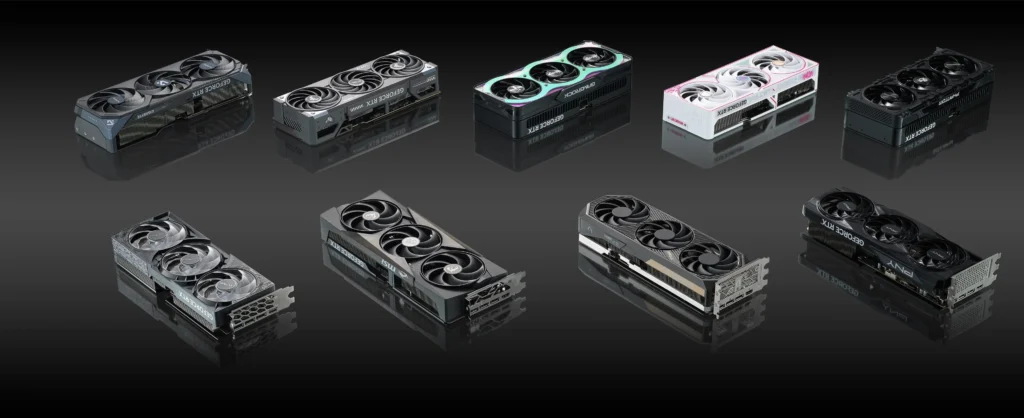
Meanwhile, some sources suggest that NVIDIA is also testing slightly modified PCBs and new power modules at SUPER versions, which could improve stability at high clock speeds. There are also mentions of new reference coolers with improved airflow. Also of interest is the fact that NVIDIA’s partners are to be given more freedom in PCB design, suggesting more differences between manufacturers than with the original models.
If the plan is confirmed, the GeForce RTX 50 Series SUPER should arrive on the market between July and September 2026. This means that for the first half of the year, NVIDIA will be building on existing Blackwell models and perhaps minor driver updates or DLSS technologies.
Conclusion
The delay of the GeForce RTX 50 Series SUPER indicates that NVIDIA is taking a more cautious approach to the transition to next-generation GPUs. From a customer perspective, this means a longer wait, but at the same time, a greater chance that these will be polished and efficient products when they launch. Combined with the growing demand for 16GB versions of the RTX 5060 Ti and potential stock shortages, 2025 could be one of the most exciting times in the gaming GPU segment.