
Although the gaming world’s attention has been focused on the current Radeon RX 9000 series based on RDNA 4 technology for some time now, AMD’s laboratories are already laying the groundwork for the next big leap. The RDNA 5 architecture has become the center of attention after the GFX1310 designation appeared in the latest LLVM compiler update. This tool, which is a key pillar for driver development and chip software optimization, has thus provided the first public confirmation of preparations for a new generation of graphics cards, known internally under the code name “Medusa.”
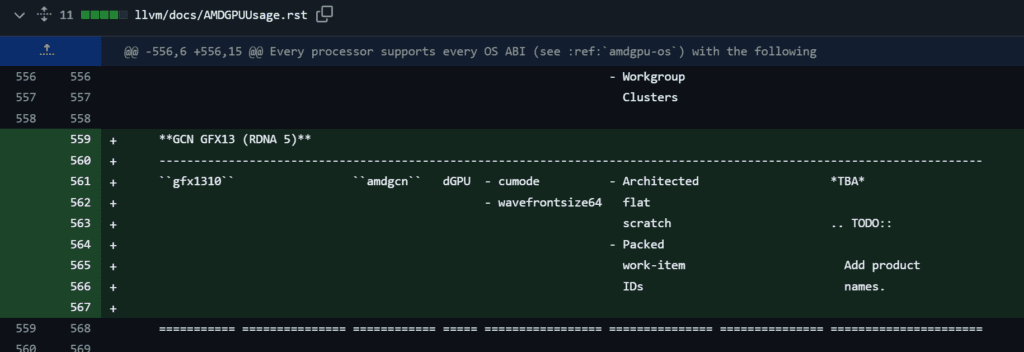
What does the GFX1310 code and the new hierarchy tell us?
In the AMD ecosystem, the GFX designation always correlates directly with a specific generation of graphics architecture. While we commonly use the GFX12 (RDNA 4) family today, the jump to number 13 is clear evidence that this will not be a minor refresh of current solutions. Historically, the transition to a new main number in the GFX hierarchy has always meant a fundamental change in the internal architecture of the graphics processor. The RDNA 5 architecture is supposed to be the long-promised “revolution on a clean sheet of paper,” which will not only strive for evolutionary improvements, but a complete change in the processing of game data.
According to current leaks from development environments, it appears that AMD is abandoning its conservative limits with this generation. While RDNA 4 was a strategic step towards efficiency and domination of the mid-range, the new generation is designed with a single goal in mind: to return to the fight for the absolute throne in the high-end segment. This RDNA 5 architecture is expected to bring completely redesigned compute units that will integrate specialized hardware blocks for a new level of AI acceleration. In practice, this would mean that AMD would definitively erase the lead of DLSS technology thanks to complex machine learning directly in the chip, taking the current capabilities of FSR 4 to a whole new level.
Return to the top league and UDNA architecture
In 2026, the term UDNA is being used more and more often – a unified architecture that is supposed to bring the gaming world (RDNA) and the professional world of AI computing (CDNA) under one roof. The RDNA 5 architecture could be the first real embodiment of this strategy. AMD’s strategic decision to “skip” the direct battle for the crown of the most powerful card in the previous generation thus begins to make perfect logical sense when looking at the GFX1310. Engineers have likely focused all their efforts on developing a chip that will not suffer from memory bandwidth limitations or insufficient ray tracing performance.
Sources from Taiwanese supply chains suggest that AMD will use TSMC’s advanced N3P manufacturing process for these GPUs . This 3-nanometer node will enable a dramatic increase in transistor density while maintaining reasonable power requirements. If speculation about the new generation’s chiplet design is confirmed, we could see flagships with more than 120 computing units.
Such a configuration, combined with the new generation of Radiance Cores, would enable smooth gaming in 4K resolution with full path tracing, which is still an unattainable goal for many cards of this brand. Ray tracing performance has been the Achilles heel of Radeons until now, but the RDNA 5 architecture is designed from the ground up to definitively break down this barrier and level the playing field with the competing RTX series.
Timeline and impact on the graphics card market
Although the appearance of GFX1310 in the LLVM compiler is an exciting milestone, we must remain realistic about the release date. Historically, it takes approximately 18 to 24 months from the first entries in the low-level code to the moment you insert the actual card into the PCIe slot. This pushes the arrival of the first commercial products with RDNA 5 architecture to the end of 2026 or the beginning of 2027. This is a long time, but for the market, it is important news about AMD’s stability and clear direction.
For gamers, however, it brings an important insight: today’s investments in the AM5 platform and modern motherboards with PCIe 5.0 support (or even the upcoming PCIe 6.0 standards) are justified. This infrastructure is being built precisely for the wave of raw performance promised by the new generation of chips.
RDNA 5 will not just be another number in the series, but most likely the biggest leap in the history of the Radeon brand since the transition from GCN to the first RDNA. We will be closely monitoring this development and will bring you a detailed analysis as soon as the first leaks from internal benchmarks of engineering samples appear. Thanks to GFX13, the battle for technological leadership in the graphics segment is once again in full swing.

The current RDNA 4 generation delivers an unbeatable price-to-performance ratio with full support for FSR 4 AI upscaling. It’s an ideal choice for smooth 1440p gaming with low power draw and temperatures.